.jpeg)



Lorem Ipsum is simply dummy text of the printing and typesetting industry. Lorem Ipsum has been the industry's.
Agricultural Technology
Indulgence of Modern Agricultural Technology in Indian Farms 

Agriculture is a big chunk of the Indian GDP. It constitutes about 18% of the total Gross Domestic Product. The world bank conducted a survey. According to it, about 38% of Indian soil is eligible for agriculture and is continuously decreasing due to urbanisation. In such scenarios, modern agricultural technology is helping farmers. This is also acting as a boon for farmers.
The widespread adoption of 4G technology across the nation has brought many benefits to farmers. Modern farming technologies like IoT (Internet of Things), robots, drones, GIS technology (Geographic Information System), etc., are extensively being used in agriculture fields in India. Let us discuss the indulgence of agricultural technology in detail.
What is Modern Agricultural Technology
Modern agriculture technology is the extensive use of robots, drones and ultra-edge technologies also in the farmlands. Thus, maximising the efficiency of the farmland without deteriorating its soil quality. Let us discuss some types of modern agriculture technology being used in India.
A. Greenhouse Automation
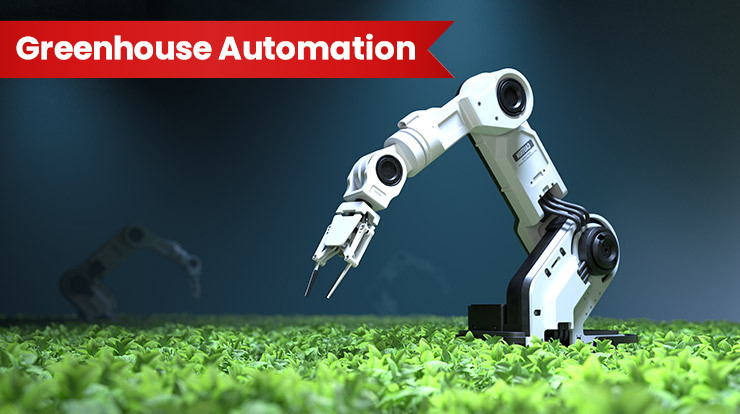
You might have heard of the greenhouse effect. Talking factually, it is responsible for heating of earth’s atmosphere. In addition, the same Greenhouse farming is usually practised in colder areas where there is a scarcity of sunlight.
However, these days the automation brought in greenhouse farming has revolutionized the sector of agriculture.
You can take following parameters into account while automating the Greenhouses with the help of machine learning through artificial intelligence. Below are some of the parameters through which Greenhouse automation takes place.
Eicher 50 HP 4 wd tractor
- Vents: These vents close and open automatically to control the temperature and air also (i.e. CO2 and O2) trapped in the greenhouse.
- Heating: The excess temperature is passed through the vents through exhaust fans.
- Cooling: The system is heated through the greenhouse effect that makes the most of it.
- Lighting: Rays in the visible and invisible spectrum of white light decide the growth of the plants. So with the help of special tube lights and lenses, you can achieve the appropriate lighting.
- Temperature: The temperature is also kept controlled by wind conditioning devices and water sprinklers.
- Irrigation: Irrigation is controlled by controlling water run-off. The amount of water absorbed by the plant tells the health of the plant.
- Roof (If it’s retractable): The retractable roof controls the amount of sunlight that enters the Greenhouse.
The above features are integrated into the Greenhouse through an application based on IoT synchronization. And this operates through mobile applications. Hence, this application of technology gives you the following advantages :
- Low labour costs
- Your crops are monitored 24*7.
- Also increased the quality of the yield produced through greenhouses.
B. Vertical Farming Tech
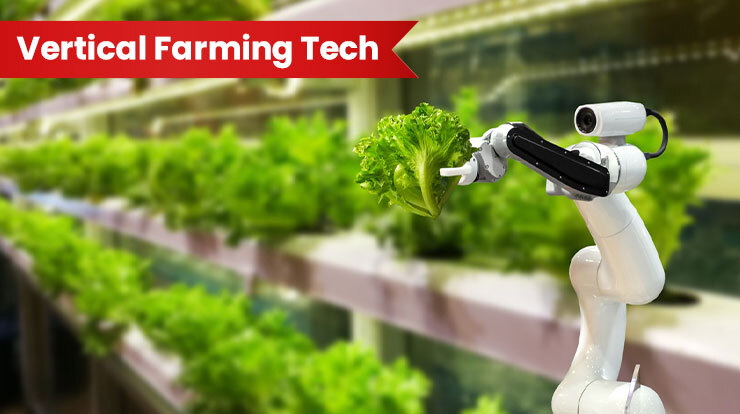
Vertical farming is supported by technologies like IoT, Artificial Intelligence, data analytics, robotics, etc. Therefore, the principal fact of the technology is growing economically viable crops vertically with the help of installed tech infrastructure.
Henceforth, this makes use of information and data collected through the ages to support the cropping and harvesting of economically beneficial crops.
In addition, vertical farming technology is composed of energy-efficient structures that automatically control the growth, development and health of high-value crops also. Some of the benefits of using vertical farming tech are as given below.
- A controlled water supply leads to less water wastage.
- One can crop and fish farm at the same time.
- Farmers just aptly treated and organically grow the crops so that you can control the over-burning of commodities.
Note: The production of low-value crops is not recommended by experts as they are not economically viable.
C. Zero Tillage
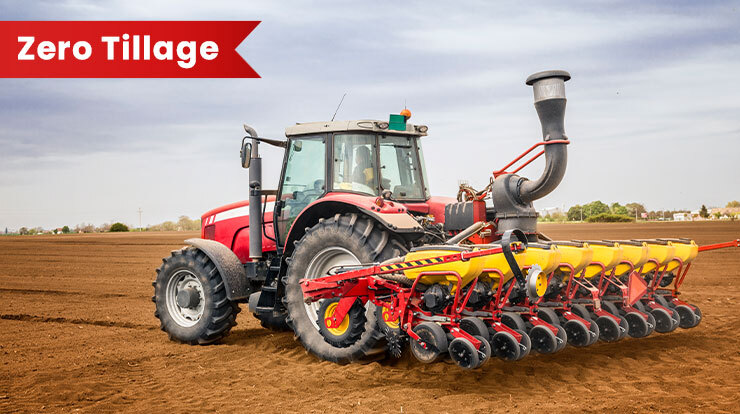
Zero-tillage is the type of crop production where the previous crop stubbles are present, and farmers sow the crop through drillers.
Hence, including cropping without any prior land preparation, disinfection, or weed removal. People across The Ganges Terrain use this type of crop production system. Here, the well-utilize GIS (Geographic Information System) to see and observe the after-affects of Zero tillage. Some of the further benefits of Zero tillage are below:
Laser Leveler
- The weeds here work as an anti-soil erosion agent and prevent the crop also.
- Also, the crop yield duration is even shorter.
- It doesn’t require irrigation, as the land chosen contains enough water.
How is Modern Agricultural Technology Helping Farmers Across India?
Modern agricultural technology is helping farmers by providing them with information. Since the farmers across India before ISRO (Indian Space Research Organization) and GIS technology were obsolete in terms of information, henceforth, this led to agricultural backwardness in the country.
Now advanced technology, including GIS, satellite imagery, and weather forecasts also, has helped farmers across India a lot.
Hence, in the forthcoming years, the extensive use of Artificial intelligence, Machine learning, Robots, drones, etc., will decide the future of agriculture in India.
What are Some of the Tech-Driven Machinery being used in the Farming System?
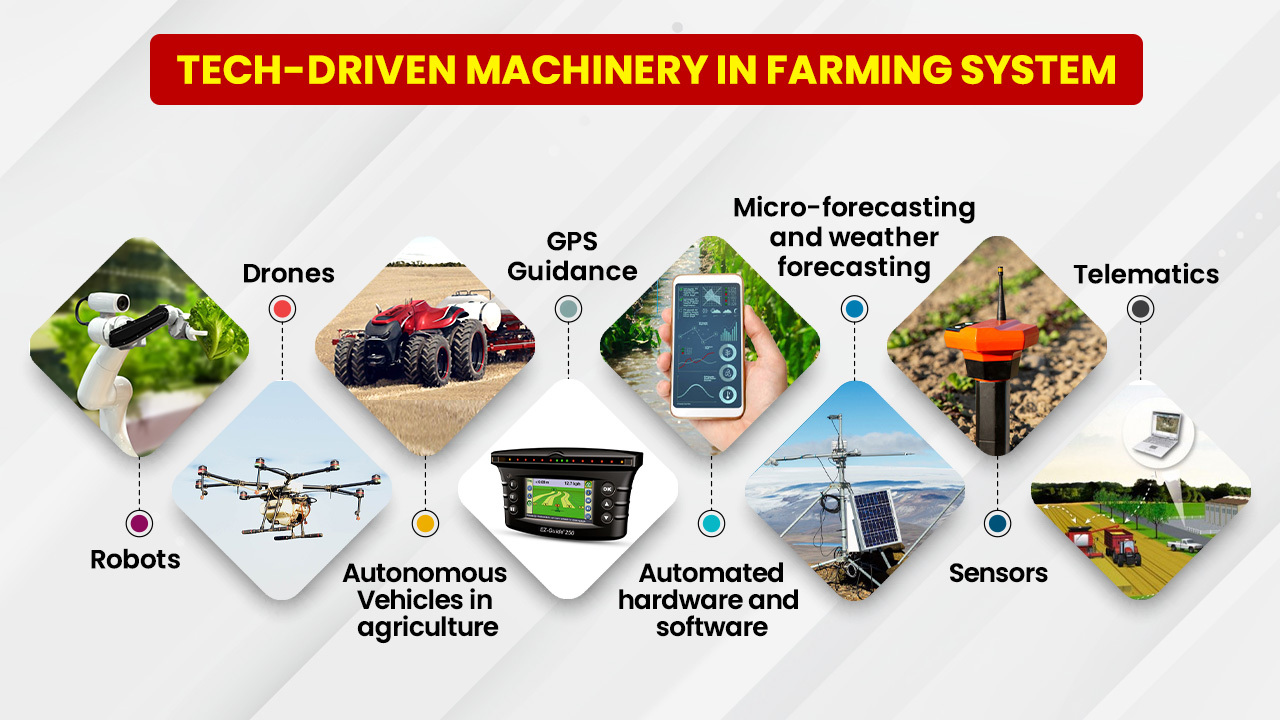
Having discussed modern agricultural technology, we will discuss about various types of agricultural technology being used in modern agriculture.
1. Robots
The AI-powered robots programmed to contain data to complete the following tasks.
- It helps to collect soil samples and analyse the soil for suitability of crop.
- For wedding off excess weeds
- Planting seeds
- Harvesting
Besides, you can expect this market to grow to a skyrocketing amount of $11.25 billion by 2025, as per Wikipedia.
Solis Hybrid 5015 Tractor
2. Drones
Drones mainly use to monitor agricultural crops. In addition, that mean to monitor crops, their health, variations in soil (if any), etc.
3. Autonomous Vehicles in Agriculture
Autonomous tractors in agriculture could help cope with labour problems. While autonomous robots are also getting the name “future agricultural machines”.
4. GPS Guidance
This technology equally helps farmers to have a wide area view of the farmland. That also mean for large-scale farmers with a lot of land.
5. Automated hardware and software
As we know, this agriculture is the future. In such scenarios, automated hardware and software shall encourage the farmer to level up his farming techniques.
6. Micro-forecasting and weather forecasting
The weather is of utmost importance to a farmer. Without weather forecasting, most farmers fail to produce a good yield.
7. Sensors
Sensors detect the soil moisture, soil nutrition, etc., to maintain the health of soil and crop.
8. Telematics
With this technology, farmers can operate in their farmlands with accuracy.
What kinds of technology are being used in end-to-end farm management?
In end-to-end farming management, you can totally control the systems with IoT devices and sensors. IoT can control reporting features and accounting features.
Henceforth, in such systems, you can use it to trace remote areas of the farmland, sitting in the comfort of your home.
Using IoT in agriculture has definitely revolutionalised the sector. Hence, the only benefit of the technology in farm management is maximizing its strengths.
Powertrac Euro 45 Plus 2WD Tractor info
What is Precision Farming?
Precision farming is a type of modern agriculture technology. Henceforth, it ensures that crops and soil receive exactly the same amount of nutrients as they require to maximize production through minimum use of environmental resources.
Hence, the main goal of precision farming is profitability through sustainability and protect use of the environment. Let us now discuss every precision farming concern in detail.
How is Precision Farming helping Farmers in Crop Production?
Farmers can involve in precision farming through the help of GIS technology. Furthermore, you can use satellite imagery systems to increase the accuracy, which helps farmland with fertilizers, pesticides, etc.
Furthermore, the satellites provide accurate information about the farmland. And hence solving serious problems such as poverty, environmental hazard, etc. It is more like shooting multiple objects with a single bullet.
What are some precision farming techniques which is helpful in crop management and agricultural production?
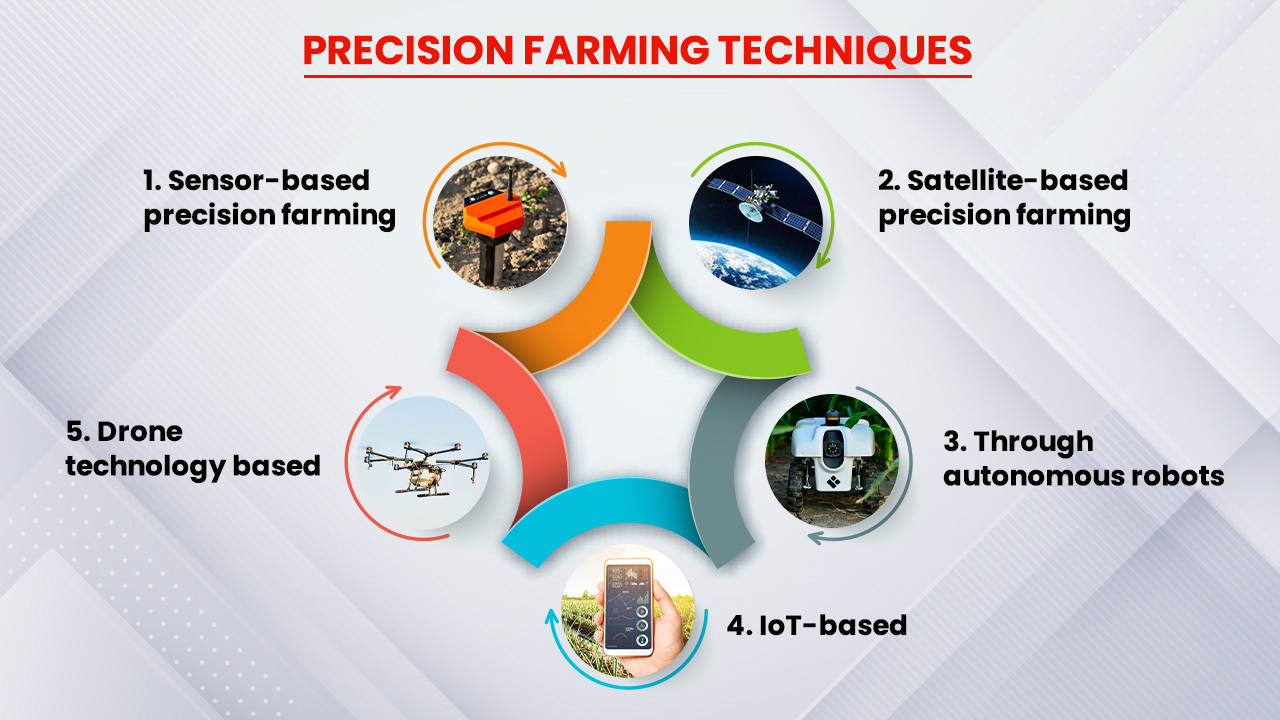
Some of the precision farming techniques that help you in crop management and agricultural production are below:
Sensor-based precision farming
Satellite-based precision farming
Through autonomous robots
IoT-based
Drone technology based
How is Machine Learning used in Precision Farming?
Machine learning through big data collected through data science is changing farming techniques in real-time. In the meanwhile, it is helping farmers through precision farming by collecting relevant data and utilizing it to make wise and quick decisions.
Hence, making it easier for farmers to maintain a sustainable environment and related precision.
The Importance of Small-Scale Irrigation Systems in Precision Farming
You can use Small-scale irrigation systems like drip irrigation systems to save natural water (groundwater) or use them efficiently.
In addition to this, precision farming uses machine learning and artificial intelligence technologies to efficiently use water with the help of sensors. Hence, there is farming, cultivation and harvesting of crops without wastage of water.
Some final thoughts
Throughout this blog on modern agricultural technology, we have understood that Indian farms deeply involve modern farming techniques. However, we have still much time to see the full-fledged developments in the field of modern agricultural technology.
What is the need to check with Garuda on tractor? Power tiller most important tips and tricks
Rice Planting Machine latest

.jfif)



0 Comments